

Across the lush islands of Vanuatu, few dishes are as deeply rooted in tradition as Laplap.
Often regarded as the country’s national dish, laplap is a hearty baked pudding made from grated root cassava, enriched with coconut cream, and cooked slowly in banana leaves over hot stones.
For generations, Laplap has been prepared for celebrations, ceremonies, and everyday gatherings, preserving cooking techniques passed down through countless generations.
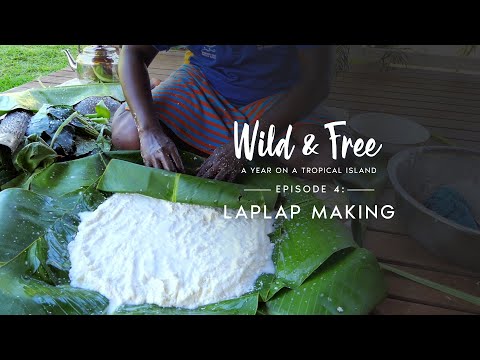
The grated base is spread onto banana leaves, topped with coconut cream and, in some recipes, meat or fish. The parcel is then wrapped securely and cooked slowly in an earth oven, where heated stones provide gentle, even heat.
The finished dish is:
- Soft and moist
- Rich and creamy
- Mildly sweet from coconut
- Earthy and comforting
Laplap is often served as a complete meal or alongside grilled fish, roasted meats, or fresh tropical vegetables.
Must Read: Holubtsi: The Ukrainian Cabbage Rolls That Warm Every Home

Laplap: Vanuatu’s National Dish Wrapped in Island Tradition
Description
Laplap is a hearty baked pudding made from grated root cassava, enriched with coconut cream, and cooked slowly in banana leaves.
Background and Origin
The origins of Laplap date back hundreds of years, long before European contact with the Pacific Islands.
The first inhabitants of Vanuatu relied on locally grown root crops such as taro, yam, and cassava, along with coconuts that flourished in the tropical climate. These ingredients formed the foundation of their daily diet.
Cooking food in underground earth ovens—known locally by different names across the islands—allowed communities to prepare large meals efficiently. Hot stones buried beneath layers of banana leaves slowly cooked the food, locking in moisture and creating rich, natural flavors.
Over time, this method evolved into the preparation of Laplap, a dish that became central to both everyday life and ceremonial occasions.
Preparing Laplap is rarely a one-person task.
Family members and neighbors often work together to grate the root vegetables, squeeze fresh coconut cream, prepare the banana leaves, and heat the stones for the earth oven. This shared effort reflects the strong sense of community that has long characterized life in Vanuatu.
The cooking process itself is as important as the finished meal, strengthening relationships while preserving cultural traditions.
With more than 80 inhabited islands, Vanuatu has many regional versions of Laplap.
Some communities prepare it using:
- Taro
- Yam
- Cassava
- Breadfruit
- Green bananas
Others include fillings such as
- Chicken
- Pork
- Fresh reef fish
- Island crab
- Local leafy greens
Each island adapts the recipe to the crops and seafood available locally, creating subtle differences while maintaining the traditional preparation method.
Banana leaves play an essential role in making authentic Laplap.
Rather than simply wrapping the food, they help retain moisture, prevent burning, and infuse the dish with a subtle earthy aroma during cooking. Combined with the slow, steady heat of the earth oven, the leaves create a naturally tender and flavorful result without the need for modern cookware.
Ingredients
Instructions
How to Prepare Laplap
- Peel, wash, and finely grate the cassava.
- Break and finely grate the coconuts too.
- Add about two cups of water to the grated coconut, mix it thoroughly, and squeeze out the milk or juice. Set the coconut shaft aside.
- Mix the grated cassava with the coconut milk. Rub some coconut milk on the banana leaves and pour the cassava mixture on it.
- Wrap it up like a parcel, using the banana leaf stems to secure it with a knot.
- Heat big stones in the flame of an outdoor fire until they're very hot.
- Once the stones are hot, place the wrapped banana contents on them, cover with more banana leaves and hot stones, and let it steam until cooked. This could take hours.
- You can wrap your favorite protein or vegetables and add them on top of the laplap while it steams.
- Once laplap is cooked, serve with fresh coconut milk on top.
 Video source: Food Matters–YouTube–image–source–Magnific
Nutrition Facts
Servings 10
- Amount Per Serving
- Calories 350kcal
- % Daily Value *
- Potassium 600mg18%
- Total Carbohydrate 45g15%
- Dietary Fiber 6g24%
- Protein 6g12%
- Vitamin C 20 mg
- Iron 2 mg
- Folate 40 mcg
- Phosphorus 120 mg
- Magnesium 60 mg
- Manganese 0.7 mg
* Percent Daily Values are based on a 2,000 calorie diet. Your daily value may be higher or lower depending on your calorie needs.
Note
Tips for Preparing Laplap
- Choose fresh root vegetables. Traditionally, Laplap is made with taro, yam, cassava, or green bananas. Fresh, firm produce provides the best texture and flavor.
- Grate the vegetables finely. Finely grating the root vegetables creates a smooth, even mixture that cooks thoroughly and develops the characteristic soft, pudding-like consistency.
- Use fresh coconut cream. Freshly extracted coconut cream gives Laplap its rich, creamy taste and authentic island flavor.
- Wrap securely in banana leaves. Lightly soften the banana leaves over a flame or in hot water to make them flexible. Wrap the mixture tightly to keep moisture inside during cooking.
- Cook slowly for the best texture. Traditionally, laplap is baked in an earth oven over hot stones for several hours. At home, it can be baked in a conventional oven at a low temperature until firm and fully cooked.
- Add fillings thoughtfully. Pork, chicken, fish, or leafy greens can be added to create a heartier meal while still preserving the traditional character of the dish.
- Allow it to rest before serving. Let the Laplap cool slightly after cooking. This helps it firm up, making it easier to slice and serve.
Must Read: Manti: The Steamed Dumplings That Traveled the Silk Road
Laplap remains the culinary heart of Vanuatu. It’s proudly served in homes, villages, cultural festivals, and restaurants, introducing both locals and visitors to one of the Pacific's oldest and most cherished traditions.
