

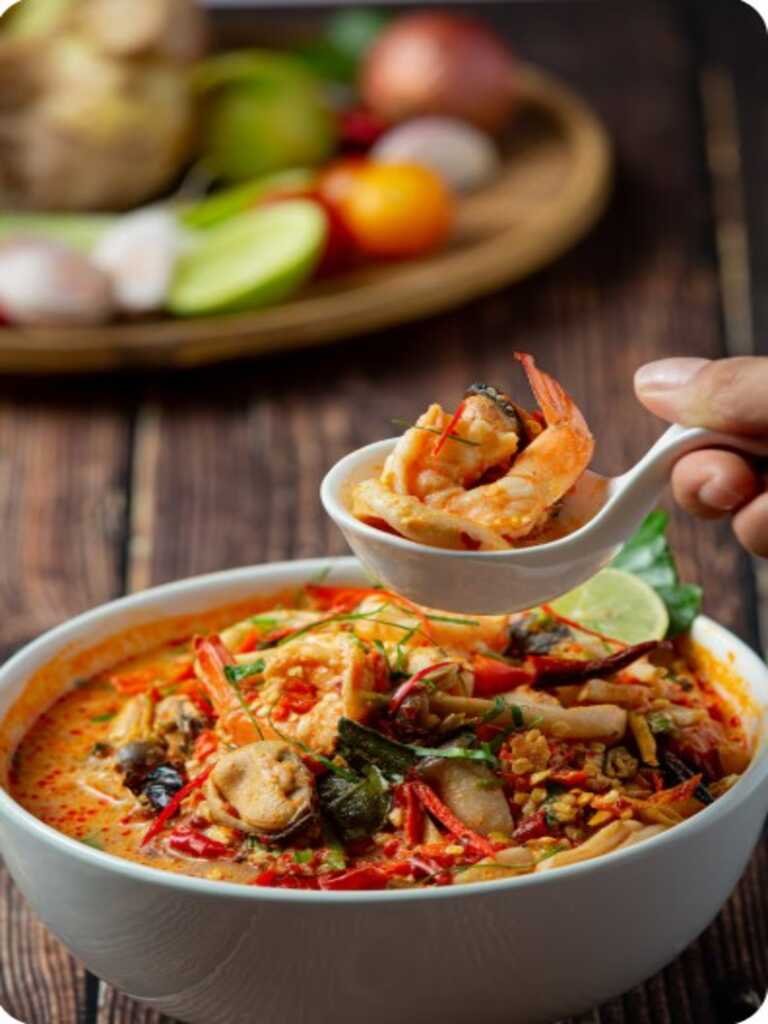
Some dishes introduce themselves gently. Laksa does not. The moment it’s served, the air changes—coconut, chili, seafood, herbs, and spice all rising together at once.
In Singapore, laksa is the flavor of cultural crossroads served in a bowl. The broth is creamy yet fiery, rich yet bright. Every spoonful feels layered rather than heavy.
One of the most famous versions is Katong, from Singapore’s eastern neighborhoods, where the noodles are cut shorter so the dish can be eaten with a spoon.
People Also Read: Sweet Island Comfort: Seychelles’ Ladob Dessert Tradition
Laksa: Singapore’s Iconic Spice Meets Cream Experience
Description
In Singapore, laksa is the flavor of cultural crossroads served in a bowl. The broth is creamy yet fiery, rich yet bright. Every spoonful feels layered rather than heavy.
Background and Origin
Laksa was born from the Peranakan culture, the community formed by Chinese settlers who married local Malay women centuries ago across Southeast Asia.
The Peranakans created a cuisine that blends:
- Chinese noodles and cooking methods
- Malay spices and herbs
- Local seafood and coconut milk
Laksa emerged from that meeting of worlds.
In Singapore, the dish evolved as communities moved, traded, and adapted recipes neighborhood by neighborhood. Each family and hawker added subtle changes, turning Laksa into something both personal and national.
Over time, it became one of the most recognized dishes in Singapore’s food culture, especially in the famous hawker centers that define the city’s culinary identity.
Laksa survives because it tastes like Singapore itself. The dish represents diversity, boldness, and layers. It’s a dish built from many traditions, learning to live in one bowl.
And that may be why Laksa remains unforgettable: it does not just tell the story of a recipe. It tells the story of how a nation learned to blend difference into something uniquely its own.
Ingredients
Laksa Paste
Laksa Stock
Toppings
Instructions
How to Prepare Laksa
- Blend all the ingredients for the laksa paste, except for the oil, until they're smooth.
- In a hot pan on medium heat, add the oil and stir-fry the laksa paste for 30 to 40 minutes. This will dry up the water content. The result is a dark-brown sauce. Set aside.
- To make the laksa stock, stir-fry the fresh prawns in a cooking pot on high heat for 2 minutes. Add the lemon grass and continue to stir-fry for 3 minutes.
- Pour in the chicken stock and cook for 40 minutes. Then strain the broth and set the prawns aside.
- Add the laksa paste to the prawn broth and stir evenly. Pour in the coconut milk and add the laksa leaves. Let it simmer for 2 minutes.
- Blanch the prawns and noodles and transfer them to a serving bowl. Add the fish cake, bean sprouts, a quarter of the boiled egg, sambal, and the tau pok. Fetch and add to the bowl some laksa sauce. Sprinkle some laksa leaves.
- Food is ready
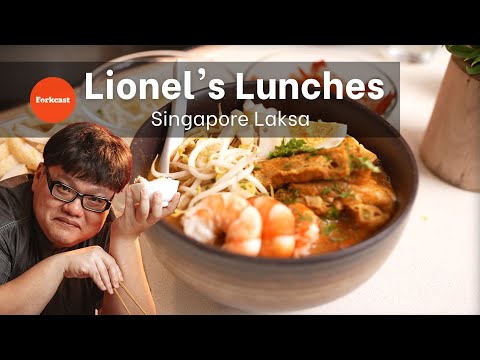
 Video credit–Forkcast–YouTube
Note
Tips for Preparing Laksa
- Use fresh aromatics. Ingredients like lemongrass, garlic, ginger, and chili create deeper flavor than pre-made blends alone.
- Balance cream and spice. The coconut milk should soften the heat, not hide it.
- Choose the right noodles. Thick rice noodles hold the broth well and give Laksa its signature texture.
- Don’t overcook the seafood.
- Layer toppings thoughtfully. Toppings such as herbs and fish cakes should add texture, not crowd the bowl.
- Taste before serving. Laksa should feel balanced—spicy, creamy, salty, and slightly sweet.
- Serve immediately. Laksa is best when hot, before the noodles absorb too much broth.
People Also Read: Rich and Nutty: Sierra Leone’s Hearty Groundnut Stew You Should Taste!
Laksa captures the spirit of Singapore in a way few dishes can. It blends cultures, flavors, and histories into one vibrant bowl that feels both comforting and exciting.
More than a noodle soup, it represents how different influences can come together without losing their individuality. And perhaps that is what makes Laksa unforgettable—it doesn’t just feed an appetite; it tells the story of a place through flavor.
