

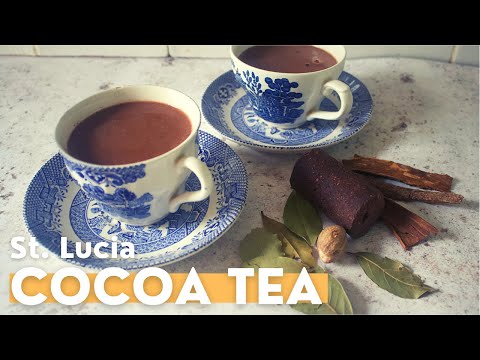
Spiced Cocoa Tea is a warm, aromatic beverage deeply rooted in the culinary traditions of Saint Lucia. Rich, comforting, and infused with spices, it’s a cherished drink often enjoyed at breakfast or during cool mornings and rainy days.
Unlike hot chocolate, Saint Lucian cocoa tea is made from pure cocoa sticks—processed but minimally refined—retaining its natural oils and deep flavor. The cocoa is grated or broken into pieces and simmered with boiling water with spices such as the following:
- Cinnamon
- Nutmeg
- Bay leaf
- Cloves
You can add sugar and evaporated milk to create a creamy, slightly sweet drink with a rich, earthy chocolate flavor. The result is a beverage that is less sugary than typical hot chocolate and more complex, with layers of spice and depth.
Must Read: Refreshing Electric Lemonade Recipe – Quick and Easy

Morning Warmth: Saint Lucia’s Spiced Cocoa Tea Tradition
Description
Spiced cocoa tea is a warm, aromatic beverage deeply rooted in the culinary traditions of Saint Lucia. Rich, comforting, and infused with spices, it’s a cherished drink often enjoyed at breakfast or during cool mornings and rainy days.
Background and Origin
Cocoa tea has its origins in the colonial history of the Caribbean, when cocoa became a major crop across islands like Saint Lucia. During this period, enslaved Africans and later local communities used cocoa in its raw, minimally processed form.
Instead of producing refined chocolate, they created cocoa sticks, which could be stored easily and used to prepare drinks. This method was practical, affordable, and allowed people to enjoy cocoa in its purest form.
Over time, the addition of spices, many of which were introduced through trade routes, gave the drink its distinctive character. These spices reflect the Caribbean’s long history of cultural exchange and agricultural richness.
Spiced cocoa tea remains a staple in Saint Lucian households, especially for breakfast, often paired with bread, bakes, or saltfish. It’s also commonly served to guests, symbolizing warmth and hospitality.
More than just a drink, cocoa tea represents heritage, resilience, and the ability to transform local ingredients into something deeply comforting.
Ingredients
Instructions
How to Prepare Cococa Tea
- Bring the water to a boil. Break the cinnamon stick into two or more pieces and add to the water. Add the bay leaves.
- Add the allspice and cloves.
- Once the water is boiling, grate the cocoa stick on a fine grater. Add it to the boiling water.
- Stir the pot, cover it, and simmer for 15 minutes.
- Strain the tea and pour it back into the pot.
- Add the sugar and the coconut milk.
- Grate in the nutmeg.
- Stir and add the vanilla. Bring to a boil.
- Mix the cornmeal with some water and add it to the pot.
- Turn off the heat after a minute and serve in your favorite tea cup with bread.
 Video credit–Keshia Sakarah–YouTube-Image source: Freepik
Note
Tips for Preparing Cocoa Tea
- Use real cocoa sticks. Authentic flavor comes from grated cocoa sticks, not powdered chocolate.
- Grate finely for smoothness. Finely grated cocoa melts more easily and gives a richer, smoother drink.
- Simmer gently, don’t boil hard. Slow heating allows the cocoa and spices to infuse without becoming bitter.
- Balance the spices. Cinnamon, nutmeg, and bay leaf should complement the cocoa.
- Add milk gradually. Whether using evaporated, condensed, or fresh milk, add it slowly to control richness.
- Sweeten to taste. Traditional cocoa tea is mildly sweet—adjust sugar based on preference.
- Strain. For a smoother texture, strain out spice pieces before serving.
- Serve hot and fresh. Cocoa tea is best enjoyed warm, when its aroma and flavor are most vibrant.
Must Read: How to Make Hunch Punch – Easy Recipe for Every Occasion
Spiced cocoa tea from Saint Lucia is a quiet ritual of comfort and heritage. Made from pure cocoa and fragrant spices, it carries the warmth of Caribbean history in every cup.
Unlike modern chocolate beverages, its richness feels grounded and authentic, offering not just sweetness but depth. In its simplicity, cocoa tea tells a story of resourcefulness, tradition, and the enduring joy of sharing something warm with others.
