

The classic seven-vegetable Moroccan couscous features steamed semolina couscous grains topped with a generous assortment of vegetables, commonly including carrots, zucchini, turnips, pumpkin or squash, cabbage, chickpeas, tomatoes, and onions.
The vegetables are gently simmered in a fragrant beef or lamb broth seasoned with Moroccan spices such as ginger, turmeric, cumin, and black pepper. The couscous is steamed multiple times to achieve a light, fluffy texture, then served with the vegetables and broth poured generously over the grains.
The broth may be served on the side for those who want more.
Must Read: Mongolia’s Buuz: Juicy Steamed Meat Dumplings for Every Celebration
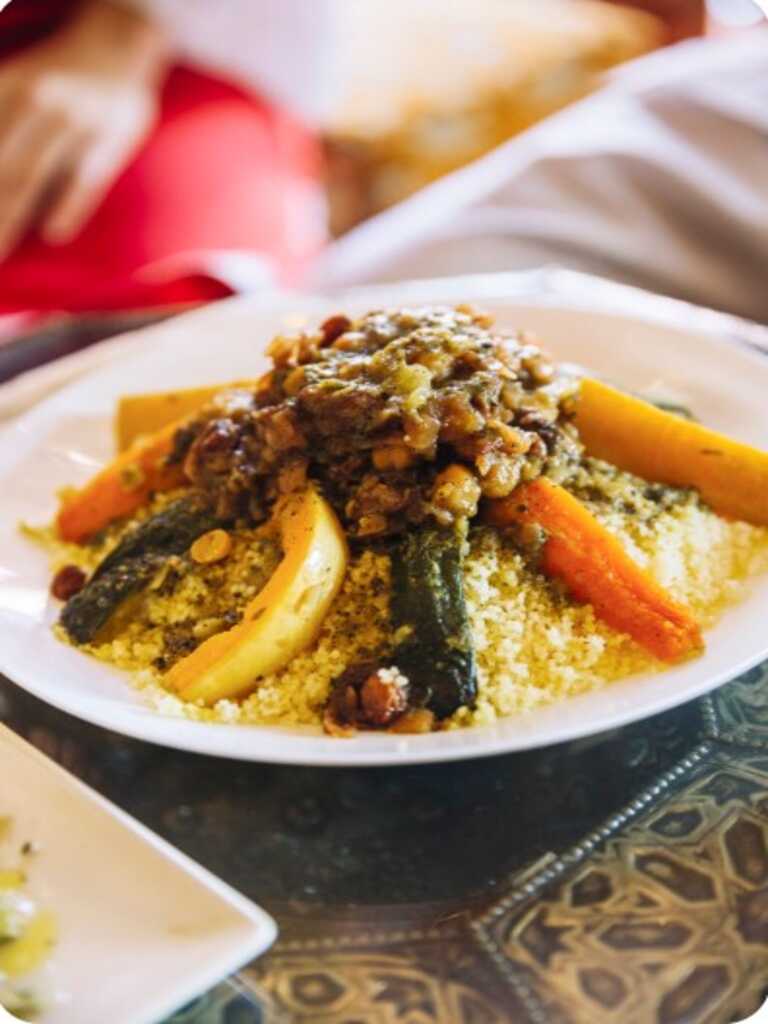
7-Vegetable Moroccan Couscous: A Classic North African Staple
Description
The classic seven-vegetable Moroccan couscous features steamed semolina couscous grains topped with a generous assortment of vegetables, commonly including carrots, zucchini, turnips, pumpkin or squash, cabbage, chickpeas, tomatoes, and onions.
Background and Origin
This dish is celebrated for its rich flavors, vibrant colors, and deep cultural symbolism. More than just a meal, it represents hospitality, balance, and tradition in Moroccan life.
Couscous has been a staple in North Africa for over a thousand years, with origins tracing back to the Amazigh (Berber) people. The seven-vegetable version holds special meaning in Moroccan culture, as the number seven is often associated with good fortune, balance, and blessing in Islamic and local traditions.
Historically, Seven-Vegetable Couscous was prepared for Friday family meals, religious celebrations, weddings, and important gatherings. It symbolized abundance and unity, as families would come together to share from one large communal dish.
Each region in Morocco has its own variation, shaped by seasonal produce and local customs, but the principle of harmony, combining earth-grown vegetables with nourishing grains, remains constant.
Ingredients
For the Couscous
For the Meat
Vegetables
Instructions
How to Prepare Moroccan Couscous
- Wash, peel and cut the vegetables into medium pieces. Ensure to remove the seeds from the pumpkin before cutting it.
- Grate the tomatoes using the larger holes side of the grater. Discard the skin. Peel and chop the onions, then set them aside.
- In a couscous steamer bottom pot on a medium heat, place the beef. Add the oil, turmeric, black pepper, salt, saffron, and ground ginger. Then add the chopped onion and mix.
- Brown the beef for 10 minutes, then add the grated tomato. Stir evenly, then add the green herbs, parsley and cilantro. Add water to cover the beef.
- Drain the soaked chickpeas and add them to the pot.
- Cover the pot and allow the beef to cook for 20 minutes.
- Place the couscous in a large plate. Add about a half cup of cold water and mix with your clean hands. Ensure the couscous is coated with water. Then transfer into the top steamer. Place it in the bottom pot already on the heat. Ensure to seal the pots with a foil so as not to lose steam. After 5 minutes, you’ll notice steam in the couscous. Set the timer at this point and steam for 15 minutes.
- Once the couscous is steamed, transfer it back to the big plate and use a fork to separate the grains sticking together. Add 2 tablespoons of vegetable oil and continue to fluff the couscous. Add salt to taste and mix evenly. Add about half a cup of water and continue to mix until the couscous is plump. Let it rest.
- Place carrots, sweet potatoes and turnips into the pot of beef. Add boiling water to cover them. Transfer the couscous into the top steamer and steam the second time on top of the beef pot. Once you can see the steam, set the timer and steam for 15 minutes.
- Empty the couscous on the large plate and fluff with a fork. Add some water and continue to mix and fluff. Let it rest for 5 minutes.
- Scoop out the root vegetables from the broth and cook the other vegetables.
- Repeat the process of steaming the couscous and steam for the third time. Steam for 15 minutes or more until it’s cooked. Once cooked, transfer to a large plate and fluff them.
- Add the butter to the couscous and fluff. Set aside.
- Scoop out the other vegetables from the pot and set aside.
- Taste the beef sauce and adjust the seasonings. You can let the beef cook more at this point. Once the beef is soft, put the vegetables back into the pot.
- To serve the couscous, make a small hole in the middle using a deep bowl. Layer the couscous with some of the beef broth. Place the beef in the middle and layer the vegetables around it. Place the chili on top of the beef.
- Serve the broth in a separate bowl beside it. Enjoy with family and friends.
 Video credit–CookingWithAlia–YouTube

Note
Tips for Preparing Moroccan Couscous
- You can also use fresh fava beans, potatoes, or other vegetables of your choice.
- Traditional couscous is steamed two or three times, not soaked. This keeps the grains light, fluffy, and separate.
- Add vegetables in stages. Start with harder vegetables, such as carrots and turnips, and then add softer ones, like zucchini and pumpkin, later to avoid overcooking.
- Moroccan couscous is aromatic, not spicy. Use warm spices like ginger, turmeric, cumin, and black pepper—avoid overpowering flavors.
- Let the broth simmer. A gentle simmer allows the vegetables and spices to blend naturally, creating depth without heaviness.
Fluff with olive oil or smen. After steaming, lightly rub the couscous with olive oil or fermented butter for richness and aroma.
Must Read: Zeamă: A Hearty Chicken Noodle Soup for Winter
Today, Seven-Vegetable Moroccan Couscous is a cornerstone of Moroccan cuisine, served in homes, restaurants, and celebrations worldwide. Its enduring popularity lies in its wholesome simplicity, adaptability, and cultural depth, making it a timeless expression of Morocco’s culinary heritage.
