

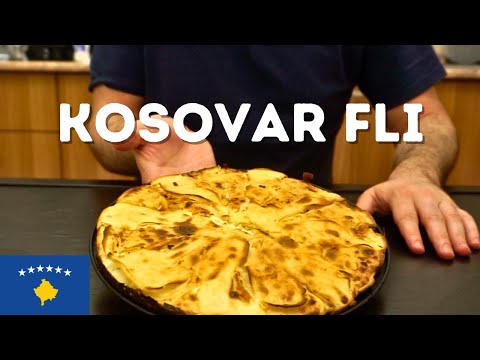
Flija is one of Kosovo’s most cherished traditional dishes. It’s a layered pastry made from a simple batter of flour, water, salt, cream, and yogurt, baked slowly under a special metal lid called a “saç” that’s heated with charcoal. In modern times, you can use a hot oven.
Each layer of batter is spread thinly and baked before the next is added, creating a golden, crispy, and soft-textured dish that’s both rustic and elegant. The process can take hours, requiring patience and care, but the result is worth it — a rich, buttery, slightly tangy delight that’s often served with honey or salty condiments.
This special pancake is an experience. Families often gather outdoors to prepare it together, taking turns tending the fire and spreading each layer. It’s a dish that symbolizes patience, togetherness, and tradition — qualities deeply rooted in Kosovo’s cultural fabric.
Must Read: Mansaf: Jordan’s National Dish of Lamb and Yogurt Sauce

Traditional Kosovo Flija– The Unique Layered Pancake Pie
Description
Flija is a layered pastry made from a simple batter of flour, water, salt, cream, and yogurt, baked slowly under a special metal lid called a “saç” that’s heated with charcoal.
Background and Origin
The origins of Flija are closely tied to the rural, agrarian lifestyle of the Albanian highlands, which includes modern-day Kosovo, northern Albania, and parts of Montenegro and North Macedonia. It is believed to date back hundreds of years, passed down through generations as a celebratory dish prepared for special occasions such as weddings, religious holidays, or community gatherings.
The technique of cooking under a “saç” reflects the region’s pastoral heritage, where outdoor, fire-based cooking was common. Since ovens were not always available, the metal lid and embers provided a practical way to bake evenly in a communal setting. The dish’s layered structure also represented abundance and effort — values highly respected in Kosovar culture.
Over time, Flija became a culinary symbol of hospitality and love, often prepared for guests as a sign of honor. Its labor-intensive nature turned it into a ritual of connection, where women would gather to cook, share stories, and strengthen social bonds.
Today, while Flija can be made in modern kitchens, it continues to hold a deep emotional and cultural significance. It’s proudly celebrated at food festivals, family gatherings, and even national events as a representation of Kosovo’s heritage, resilience, and unity.
Ingredients
Instructions
How to Prepare Flija
- Add the melted butter to a mixing bowl, followed by the room-temperature milk. Add a sprinkle of salt and the all-purpose flour. Mix evenly. The result will be a medium-thick pancake mixture.
- In a separate bowl, add the sour cream, yogurt and ayran. Mix thoroughly and set aside.
- Brush some butter in a circular cake dish. Layer the flour mixture in the baking dish in a sun-shaped design.
- Bake in a preheated oven at 250 degrees Celsius until it starts to brown. Remove it and fill the baking pan with the flour mixture, then bake for 4 minutes. Take it out again, and this time, layer the brown flija with the cream mixture, just a thin layer to cover the surface. Then make a sun-shaped design with the creamy mixture. Place it back into the oven for 4 minutes. Then repeat the process, following the flour mixture, then the creamy mixture, until the mixtures are all layered and baked.
- You’ll have about 12 to 15 layers of flija. Bake until golden brown.
- Serve a piece and garnish with honey and some kebabs.
 Video credit: Tales from the Road–YouTube
Note
Tips for Making Flija
- You can use any type of cream as desired, either whipping or heavy cream for flija.
- Ensure your oven is heated well before starting to put the layered flija in it.
- Enjoy flija alone or with salty or sweet condiments.
Read Also: Authentic Serbian Sarma— Traditional Balkan Cabbage Rolls
Flija is a labor of love and a cultural emblem. Every layer tells a story of patience, community, and the enduring warmth of Kosovo hospitality. Whether baked under an open sky or in a modern oven, Flija remains a timeless reminder that the best things in life— like good food and togetherness— take time.
Happy cooking!
