

Beshbarmak, meaning “five fingers” in Kazakh, is the national dish of Kazakhstan and a culinary emblem of Central Asia.
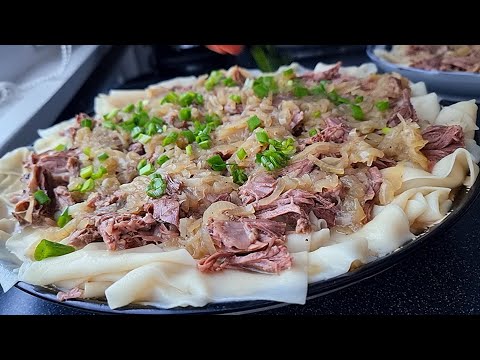
The name comes from the traditional way it was eaten—with one’s hands. The dish consists of boiled meat, often lamb, beef, or horse meat, served over large, flat pasta-like noodles, and topped with an onion sauce called sorpa. The rich broth from the meat is also served separately as a soup.
Beshbarmak is not just a meal—it is a ceremonial dish, prepared in large quantities for family gatherings, weddings, and celebrations. It is typically served on a communal platter, emphasizing togetherness and hospitality.
Read Also: Mansaf: Jordan’s National Dish of Lamb and Yogurt Sauce

Beshbarmak: Kazakhstan’s Hearty National Pasta and Meat Dish
Description
Beshbarmak, meaning “five fingers” in Kazakh, is the national dish of Kazakhstan and a culinary emblem of Central Asia.
Background and Origin
The origins of Beshbarmak are deeply rooted in the nomadic traditions of the Kazakh people. For centuries, nomadic tribes relied on livestock—particularly horses, sheep, and cattle—for survival. Meat from these animals became central to their diet, while wheat and noodles were later introduced through trade along the Silk Road.
Horse meat, in particular, held cultural importance and was often reserved for honored guests and major celebrations. Eating with the hands symbolized both practicality and a sense of community among nomadic families who shared meals around the fire.
Over time, Beshbarmak became more than sustenance—it evolved into a symbol of Kazakh identity, embodying values of hospitality, respect for guests, and cultural pride.
Today, it remains the highlight dish at national holidays and important gatherings, and is a way for Kazakhs to honor their history and traditions.
Ingredients
Dough Ingredients
Onion Sauce and Broth
Instructions
How to Prepare Beshbarmak
- Fill a cooking pot with water on medium heat and drop the meat into it. Once it boils, scoop out the fat that has settled on top of the pot. Drop in the carrot, onion, pepper and salt. Cook on low heat for at least 2.5hours.
- In a big bowl, pour the flour. Add a teaspoon of salt, an egg and 200 millilitres of water. Mix thoroughly until even and forms into a dough. Wrap a clean film around the dough and let it rest for 30 minutes.
- Scoop out the cooked meat into a bowl and set aside.
- In a separate cooking pan on medium heat, add the chopped onion and add about 2 cups of the meat broth. Add salt and pepper to taste. Stir and cover the pot, and cook for 10 minutes.
- Sieve some of the broth into a bowl and set aside. Add 1 liter of water to the remaining meat broth on the heat.
- On a flat, clean surface, sprinkle some flour and knead the dough. Use a rolling pin to flatten the dough, sprinkling some flour on it in the process to avoid sticking.
- Continue to roll the dough until it's very thin. Cube out pieces of the flattened dough
- Once the broth on medium heat boils, add the salt and pieces of the cubed dough. Cook for 2 minutes and scoop out the flat dough. Add more dough to the broth and cook for 2 minutes. Scoop them out on a plate and set aside. Repeat the process until you cook all the dough in the broth.
- Shred the cooked meat and layer it on top of the dough. Then layer on top of the meat the cooked onion sauce.
- Garnish with chopped spring onions and serve alongside some broth.
- Yummy!
 Video credit: Uzbek Tea House–YouTube
Note
Tips for Preparing Beshbarmak
- You can use either mutton or beef as protein in preparing beshbarmak.
- Ensure to roll and flatten the dough as thin as possible for the best result and flavor.
- Always sieve the broth before cooking with the onion and serving it alongside the main dish.
Read Also: Classic Italian Carbonara: Creamy Pasta with a Roman Touch
Beshbarmak is a reflection of nomadic heritage, unity, and hospitality. With its hearty flavors and communal spirit, it continues to connect modern Kazakhstanis with their ancestors and cultural roots.
