

Kaukau, or sweet potato, is the most important staple food in Papua New Guinea. Simple to prepare and deeply nourishing, it forms the backbone of daily meals across both rural villages and urban homes.
Kaukau is valued for its versatility and is prepared in several traditional ways:
- Boiled
Fresh kaukau is washed, peeled or left unpeeled, cut into chunks, and boiled in water until tender. You can eat it plain or paired with greens, fish, or meat.
- Roasted over fire or hot stones
Whole kaukau is roasted directly in embers or over open flames, giving it a smoky flavor and soft interior.
- Cooked in a mumu (earth oven)
For special occasions, kaukau is cooked in a mumu—an underground oven layered with hot stones, leaves, and other ingredients. This method slow-cooks the sweet potato alongside meats and vegetables.
- Mashed or mixed with greens
Boiled kaukau may be mashed and combined with leafy greens like aibika, often enriched with coconut milk. This 4th method of cooking is what we’ll be looking at today.
Must Read: Island Fresh: Niuean Ota Ika in Coconut Cream
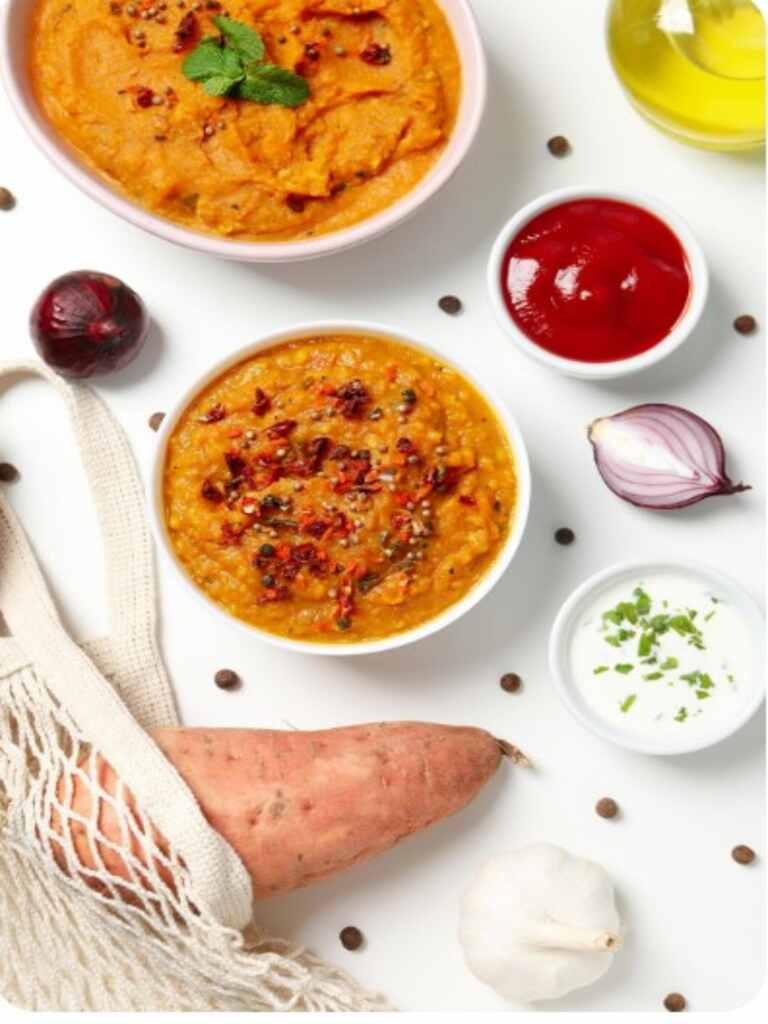
Kaukau: The Everyday Staple of Papua New Guinea
Description
Kaukau, or sweet potato, is the most important staple food in Papua New Guinea. Simple to prepare and deeply nourishing, it forms the backbone of daily meals across both rural villages and urban homes.
Background and Origin
Kaukau has been cultivated in Papua New Guinea for thousands of years, long before European contact. Archaeological evidence suggests that highland communities domesticated sweet potatoes as early as 8,000 years ago, making it one of the oldest agricultural traditions in the region.
The crop thrives in Papua New Guinea’s diverse climates, especially in the highlands, where it has become central to food security. Because it is easy to grow, stores well in the ground, and provides high energy, kaukau supported population growth and village life.
Beyond nutrition, kaukau holds social and cultural value. It’s used in:
- Daily family meals
- Ceremonial feasts
- Bride-price exchanges and community gifting
Sharing kaukau symbolizes generosity, survival, and connection to the land.
Today, kaukau remains a cornerstone of Papua New Guinean cuisine and identity. Whether simply boiled for breakfast or baked in the oven or open flame, it represents resilience, tradition, and the enduring relationship between people and their environment.
Ingredients
Instructions
How to Prepare Kaukau
- Wash and wrap the sweet potatoes in aluminum foil, then place them in a baking tray. Bake until it's cooked.
- Scoop out the contents of the baked sweet potatoes from the skin into a bowl. Add the butter, salt, and pepper, then mix with a fork. Set the skin as bowls aside.
- Add the onion, ginger, garlic, paprika, and half a cup of coconut cream. Scoop in the orange juice and mix evenly.
- Fill the sweet potato mash into the skin; set aside. Bake for 15 minutes.
- Garnish with onions or greens of your choice.
- Serve and enjoy!
 Video credit: profmele–YouTube-image source-Freepik

Note
Tips for Preparing Papua New Guinea’s Kaukau
- Choose firm, mature kaukau. Firmer roots bake evenly and develop better natural sweetness.
- Wash well, leave the skin on. The skin protects the flesh while baking and adds nutrients and earthy flavor.
- Bake slowly for sweetness. Moderate heat allows the natural sugars to caramelize without drying the inside.
- Use moderate coconut cream and spices.
- Garnish with greens of your choice.
Must Read: Makayabu: A Beloved Dish from the Heart of Congo
Whether baked to bring out its natural sweetness or mashed into a comforting, nourishing dish, kaukau reflects a tradition of cooking that values patience, balance, and respect for the land. Its enduring presence in daily meals and communal gatherings highlights how simple ingredients, prepared with care, can carry deep cultural meaning across generations.
