
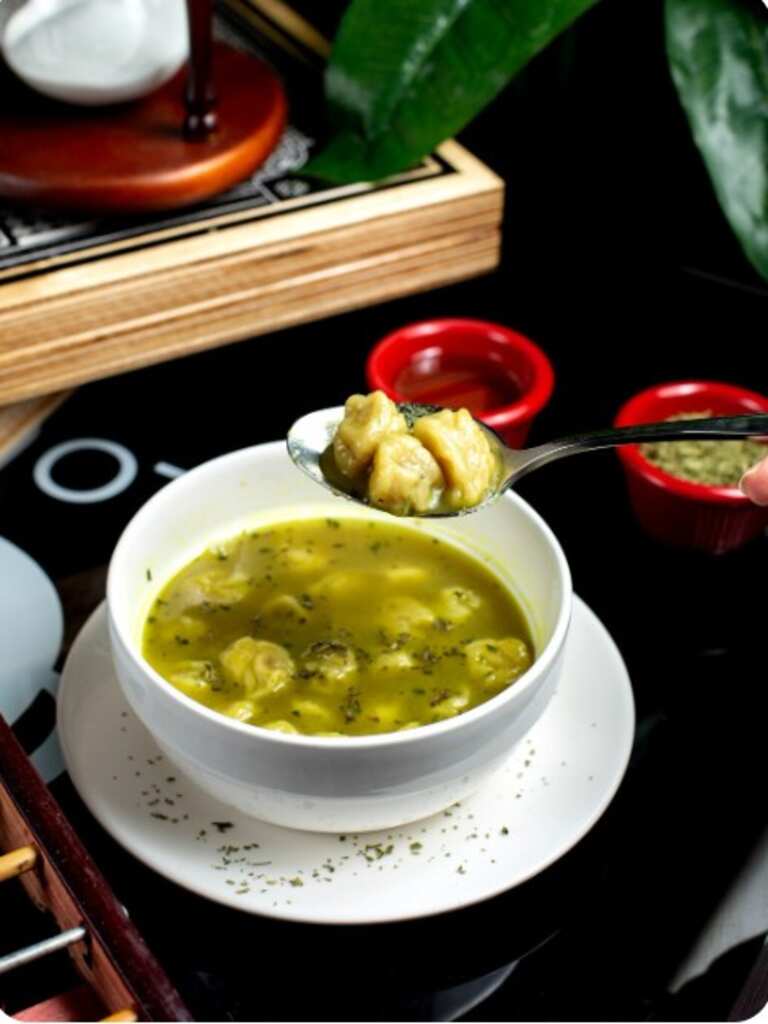
Palau’s taro leaf soup is a comforting, earthy dish that reflects the deep connection between food, land, and community in Palau. Made primarily from young taro leaves slowly simmered in coconut milk, the soup is rich, creamy, and gently herbal.
Taro leaf soup is often flavored with onions, garlic, fish, and sometimes crab or smoked meat, depending on availability and occasion. The result is a nourishing meal that is both simple and deeply satisfying.
Must Read: Majboos: Fragrant Spiced Rice with Meat or Seafood
Palau’s taro leaf soup is a comforting, earthy dish that reflects the deep connection between food, land, and community in Palau.
Historically, taro has been one of Palau’s most important staple crops, cultivated in carefully maintained wet gardens that have been passed down through generations. Every part of the plant was valued, and taro leaves—when properly cooked to remove their natural bitterness—became a vital source of nutrients. Coconut milk, another cornerstone of island life, added richness and calories, making the soup especially important in times when resources were limited.
Taro leaf soup has long been associated with communal cooking and traditional gatherings. It is commonly prepared for family meals, village feasts, and cultural celebrations, symbolizing hospitality and respect for ancestral foodways.
Today, Palau’s taro leaf soup remains a living link to the past. While modern variations may include new ingredients or cooking methods, the dish continues to embody sustainability, cultural pride, and the enduring relationship between Palauan people and their environment.
Read Also: Island Fresh: Niuean Ota Ika in Coconut Cream
Whether you enjoy taro leaf soup as an everyday meal or during communal gatherings, it remains a comforting reminder of Palau’s close relationship with the land and sea and of how humble ingredients can create lasting cultural significance.