

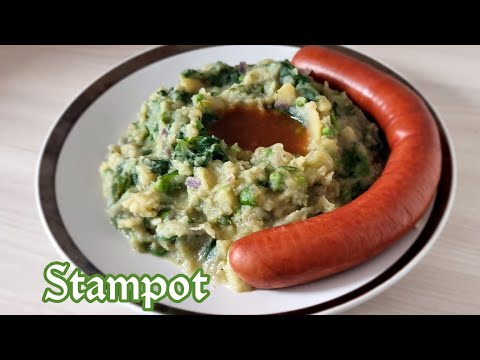
Stamppot is one of the Netherlands’ most comforting and traditional dishes, known for its hearty simplicity and nourishing warmth. It’s a mashed dish prepared from potatoes combined with vegetables, traditionally served with smoked sausage, bacon, or meatballs.
Common variations of vegetables include kale, spinach, carrots, green peas, onions, and zuurkool.
The potatoes are boiled and mashed, then mixed with other ingredients to create a rustic, chunky texture. A small well is often made in the center of the mash to hold gravy or melted butter.
Must Read: Montenegro’s Traditional Kacamak for Breakfast

Dutch Winter Classic: Stamppot Mashed Potatoes & Vegetables
Description
Stamppot is one of the Netherlands’ most comforting and traditional dishes, known for its hearty simplicity and nourishing warmth.
Background and Origin
Stamppot dates back to at least the 16th century, when potatoes were introduced to Europe from the Americas. As potatoes became a staple crop in the Netherlands, they were combined with locally grown vegetables to create filling, affordable meals.
One of the most famous versions, Hutspot, is linked to the Siege of Leiden in 1574. According to legend, townspeople found a pot of mashed carrots, onions, and potatoes left behind by retreating Spanish soldiers and adopted it as a celebratory dish. Hutspot is still eaten annually in Leiden to commemorate the city’s liberation.
Stamppot evolved as a practical response to the cold Dutch climate, providing warmth and energy during long winters. It became a staple of working-class households, valued for its simplicity, affordability, and ability to feed large families.
Ingredients
Instructions
How to Prepare Stamppot
- Wash, peel, and cut the potatoes into cubes. Add water to them in a pot and cook on medium heat until tender. Drain some of the water and mash the potatoes. Still on the heat, add the butter, milk, the finely chopped onions, and the garlic.
- Also, add the black pepper and nutmeg, and stir the ingredients together.
- Add the spinach and mint leaves and stir.
- Add the kale and mix evenly. Stir in the green peas and allow the stamppot to simmer for 5 minutes.
- Serve with sauce and sausages.
 Video credit–Aadis Channel–YouTube-image source-Freepik
Note
Tips for Preparing Stamppot
- You can use frozen or fresh green peas as desired.
- Choose floury potatoes. Use starchy potatoes like russets or Maris Piper for a fluffy, smooth mash.
- Don’t over-mash. Stamppot should be rustic, not creamy like mashed potatoes. Leave a little texture.
- Add butter generously. Butter is key to richness and comfort.
- Warm the milk before adding. Warm milk blends better and keeps the mash smooth and hot.
- Add salt lightly at first, especially when using sauerkraut or smoked sausage, which already adds saltiness.
- Serve with the right protein. Smoked sausage, bacon, or meatballs complete the dish.
- Create the gravy well. Make a small hole in the center of the mash for gravy or melted butter—a classic Dutch touch.
- Serve immediately. Stamppot is best enjoyed hot, especially during colder months.
Must Read: Spicy Mozambican Piri-Piri Chicken in Traditional Sauce
Deeply rooted in Dutch daily life, Stamppot reflects the country’s agricultural heritage and practical approach to cooking.
Today, Stamppot remains a beloved national dish, enjoyed at home and in traditional restaurants. While modern versions may include gourmet twists, the heart of Stamppot stays the same: simple ingredients, shared meals, and comforting flavors that connect generations.
