
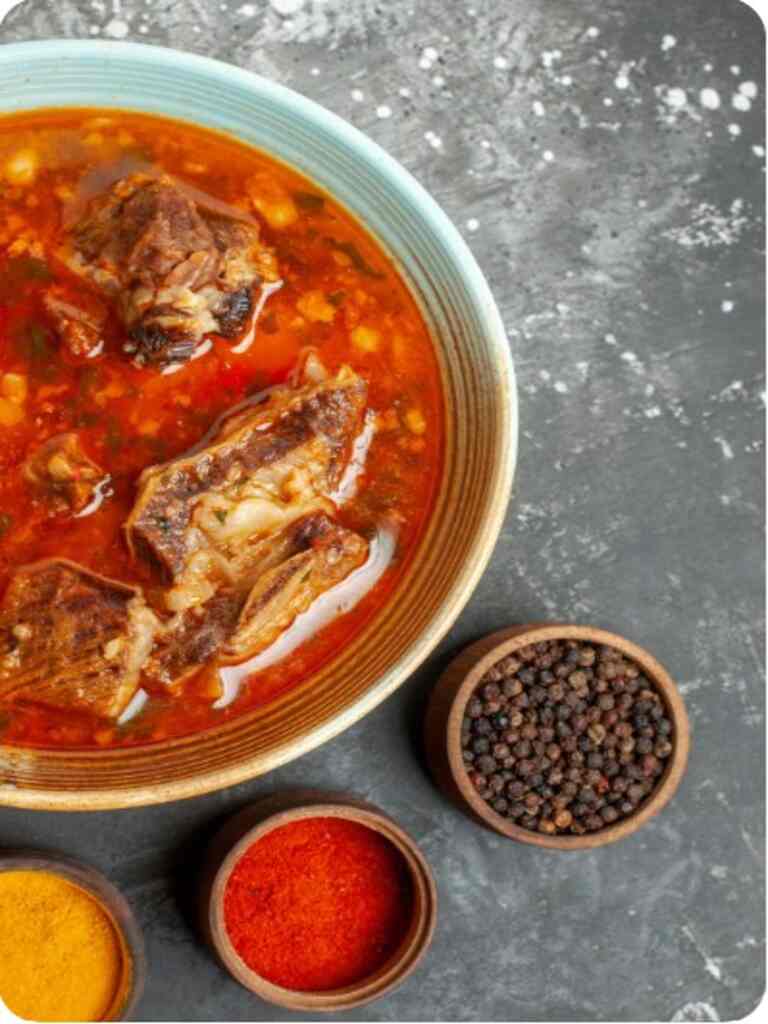
Nihari is a slow-simmered meat stew, traditionally made with beef shank, marrow bones, or sometimes lamb or chicken.
The meat is cooked for hours in a thick gravy flavored with ginger, garlic, chili, and a distinctive blend of spices such as cloves, cardamom, nutmeg, and mace. The long cooking time allows the meat to become incredibly tender while the broth develops a silky richness.
It’s most commonly enjoyed with bread, often garnished with green chilies, coriander, lemon, and sometimes bone marrow.
Read Also: Angolan Bean Soup (Caldo de Feijão): A Warm Hug in a Bowl
Nihari is a slow-simmered meat stew, traditionally made with beef shank, marrow bones, or sometimes lamb or chicken.
Nihari traces its roots to the Mughal era in South Asia. The name comes from the Arabic word "nahar," meaning "morning," as the dish was traditionally eaten at dawn. It was originally prepared as a royal breakfast, slow-cooked overnight, and served to Mughal nobles after morning prayers.
When the Mughal influence spread across the Indian subcontinent, Nihari evolved into a popular dish among the public. After the creation of Pakistan in 1947, Nihari became especially associated with Karachi and Lahore, where it developed into a beloved national favorite and a staple of weekend and celebratory meals.
Today, Nihari is synonymous with family gatherings, religious holidays, and special occasions. Its slow preparation reflects patience and care, while its bold flavor represents the richness of Pakistani cuisine.
From royal kitchens to street-side eateries, Pakistani Nihari remains a powerful symbol of history, resilience, and the enduring love for deeply satisfying food.
People Also Read: Mohinga: The Soul-Warming Noodle Soup of Myanmar
Nihari stands as a true icon of Pakistani cuisine—slow-cooked, deeply spiced, and steeped in history. From its Mughal-era origins to its place on modern family tables, it remains a powerful symbol of tradition, patience, and the comforting richness of shared meals.