

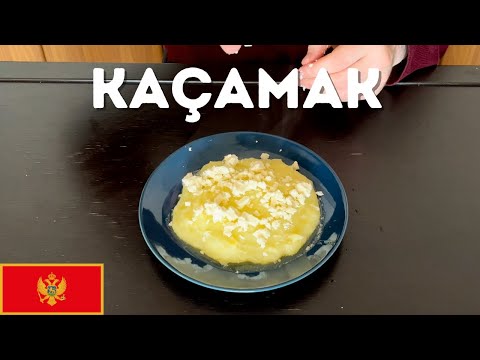
Montenegrin kacamak is a thick, smooth porridge made primarily from cornmeal and potatoes, slowly cooked together until they form a dense, elastic consistency. It’s traditionally enriched with kajmak, a creamy dairy product similar to clotted cream, or cheese, and often finished with melted butter or sour milk. The dish is filling, warming, and rich, making it ideal for cold mountain regions.
Kacamak is usually served hot and eaten with fermented milk, yogurt, or alongside cured meats, depending on the region and household tradition.
Read Also: Zeamă: A Hearty Chicken Noodle Soup for Winter

Montenegro’s Traditional Kacamak for Breakfast
Description
Montenegrin kacamak is a thick, smooth porridge made primarily from cornmeal and potatoes, slowly cooked together until they form a dense, elastic consistency.
Background and Origin
Kacamak is one of Montenegro’s most traditional and comforting dishes, deeply rooted in the country’s rural and mountainous heritage. Simple yet hearty, it reflects a way of life shaped by agriculture, livestock farming, and survival in harsh climates.
Kacamak dates back several centuries and originated as a peasant food, particularly among shepherds and farming communities in northern Montenegro. Corn became a staple ingredient after its introduction to the Balkans in the 16th century, replacing earlier grains and making kacamak more widespread and affordable.
Because it required few ingredients and provided high energy, kacamak became essential for people engaged in physically demanding work. Over time, it evolved from a necessity into a cultural symbol of hospitality, resilience, and tradition.
Today, kacamak remains an important part of Montenegrin cuisine, served both in rural homes and traditional restaurants. It represents the country’s connection to its land, history, and simple but nourishing food culture.
Ingredients
Instructions
How to Prepare Montenegro’s Traditional Kacamak for Breakfast
- Peel the potatoes and cut them into pieces.
- Put about 2 to 3 cups of water to the boil and add the salt. Once it boils, add the potatoes. Let it cook until tender for 15 minutes.
- Once the potatoes are tender, add the corn flour bit by bit to the pot, stirring. As you stir, mash the potatoes into a puree.
- Mix and stir until it's thick.
- Melt the butter in a separate saucepan. Scoop some of the porridge into a bowl and layer the melted butter on top. Then crumble the goat cheese on it.
- Serve and enjoy alone or with bread.
 Video credit: Tales from the Road–YouTube-image-source-Freepik
Note
Tips for Preparing Kacamak
- Use coarse corn flour. Traditional kacamak is made with coarse or stone-ground cornmeal. This gives the dish its characteristic texture and authentic taste.
- Kacamak requires patience. Cook the cornmeal and potatoes slowly over low heat, stirring regularly to prevent lumps and sticking.
- Balance the potatoes and cornmeal. Potatoes make the dish creamier and softer. Avoid using too many, as they can overpower the cornmeal’s flavor.
- Finish with butter or sour milk. A drizzle of melted butter or a side of sour milk or yogurt enhances flavor and balances the richness.
- Serve immediately. Kacamak thickens quickly as it cools, so it’s best enjoyed fresh and hot.
Pair it traditionally. Serve with cured meats, fermented dairy, or pickled vegetables for a truly Montenegrin experience.
Read Also: Angolan Bean Soup (Caldo de Feijão): A Warm Hug in a Bowl
Originating as a simple, nourishing meal for rural and mountain communities, kacamak reflects Montenegro’s agricultural heritage and way of life. Today, kacamak remains a beloved comfort food, symbolizing tradition, resilience, and hospitality in Montenegrin cuisine.
